Best for
SaaS and ops platforms with live books. Products that already invoice, collect, or pay out, and need those movements to land cleanly in QuickBooks or Xero.

Finance integrations
Connect your product or ops platform to QuickBooks Online and Xero. Finance sees a next step, not a log file.
SaaS and ops platforms with live books. Products that already invoice, collect, or pay out, and need those movements to land cleanly in QuickBooks or Xero.
Sync, exceptions, operator UX. Connectors, matching, retry policy, and the dashboard finance uses when a line does not match.
Generic API glue or Zapier-only. CRM, payments, and ops connectors live under Integrations & APIs. Make/Zapier orchestration lives under Automation.
The integration is not finished when data syncs. It is finished when finance can confidently close the books. Need CRM or payment connectors too? See Integrations & APIs.
Platforms
Official APIs, not Desktop workarounds as the default. UK and US entities, with a unified operator view when you run both.

QBO is the default for US books. We map invoices, payments, customers, items, and tax codes through Intuit's API, with token refresh, rate-limit backoff, and idempotent writes.

Xero is the default for UK orgs and many dual-region SaaS setups. Same operator dashboard as QBO, separate connector, shared exception language so finance is not learning two products.
Why this exists
The connector "worked in staging." Month-end is where it fails. These are the patterns we design against.
Jobs report success while amounts, tax, or entity mapping quietly diverge. Controllers find it in a spreadsheet, not in the product.COST: variances surface outside the product
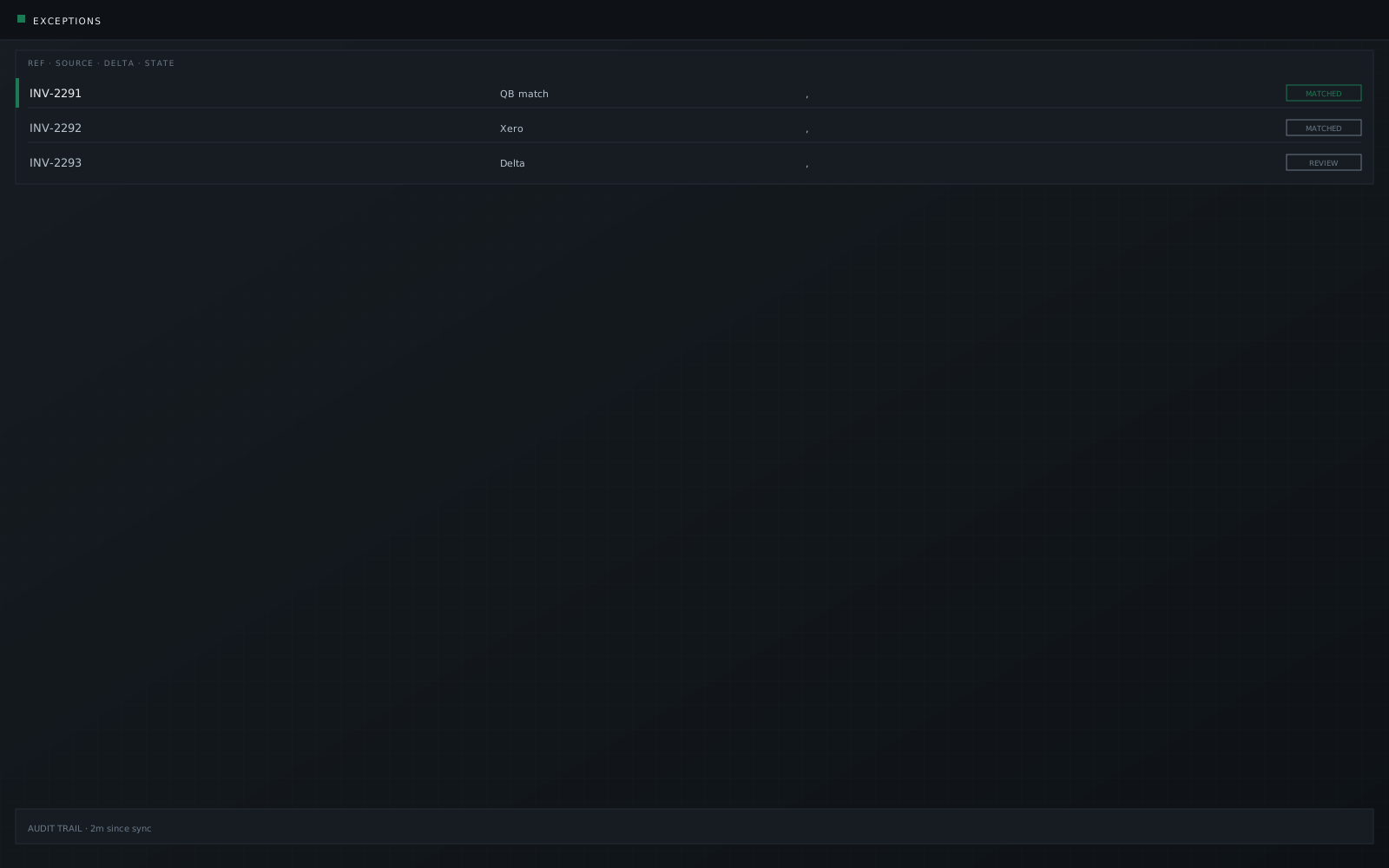
Exceptions pile up as raw API errors. Outsourced finance cannot act without engineering, so close slips by days.COST: close slips waiting on engineering
A timeout posts the invoice twice. Without idempotency keys and a match engine, the books get worse every retry.COST: duplicate postings on every retry
One close cycle
Seven stages. Scroll to run one job: 247 matched + 1 exception is better than a fake "100% success."
QuickBooks Online
Xero
Job #2291-08 · queued
Invoices, payments, and credit notes queue with stable keys and idempotent workers. Finance sees counts, not a log file.
Missing accounts, unknown tax, or a currency the org does not hold fail here, not inside the ledger.
The job reports what matched. The one that did not stays visible instead of disappearing into "success."
Source 1,204.75 against ledger 1,240.75. Transposition suspected. No raw Intuit or Xero payload in the operator view.
Retry, confirm the correct value, or park it. Every action is attributable. Outsourced controllers can finish this step.
Once confirmed, the record matches both books. Close does not wait on a Slack thread.
The trail is written in language an accountant will accept. That is the bar: the integration is finished when finance can confidently close the books.
Capabilities
Connectors and operator UX from the same in-house team: no handoff between "the API person" and "the dashboard person."
Match invoices, payments, and credit notes with counts finance can trust. See FinanceSync.
Discrepancy cards with remediation steps for outsourced finance teams.
Who changed the amount, which job retried, and why the line closed.
Types we surface
Source and ledger disagree. Both values and suspected cause, not a status code.
Wrong code, missing rate, or a US/UK org using the other region's rules.
Posted to the wrong company file or Xero org. Multi-entity is first-class.
A retry that already posted, or a payment with no matching invoice.
Operator view
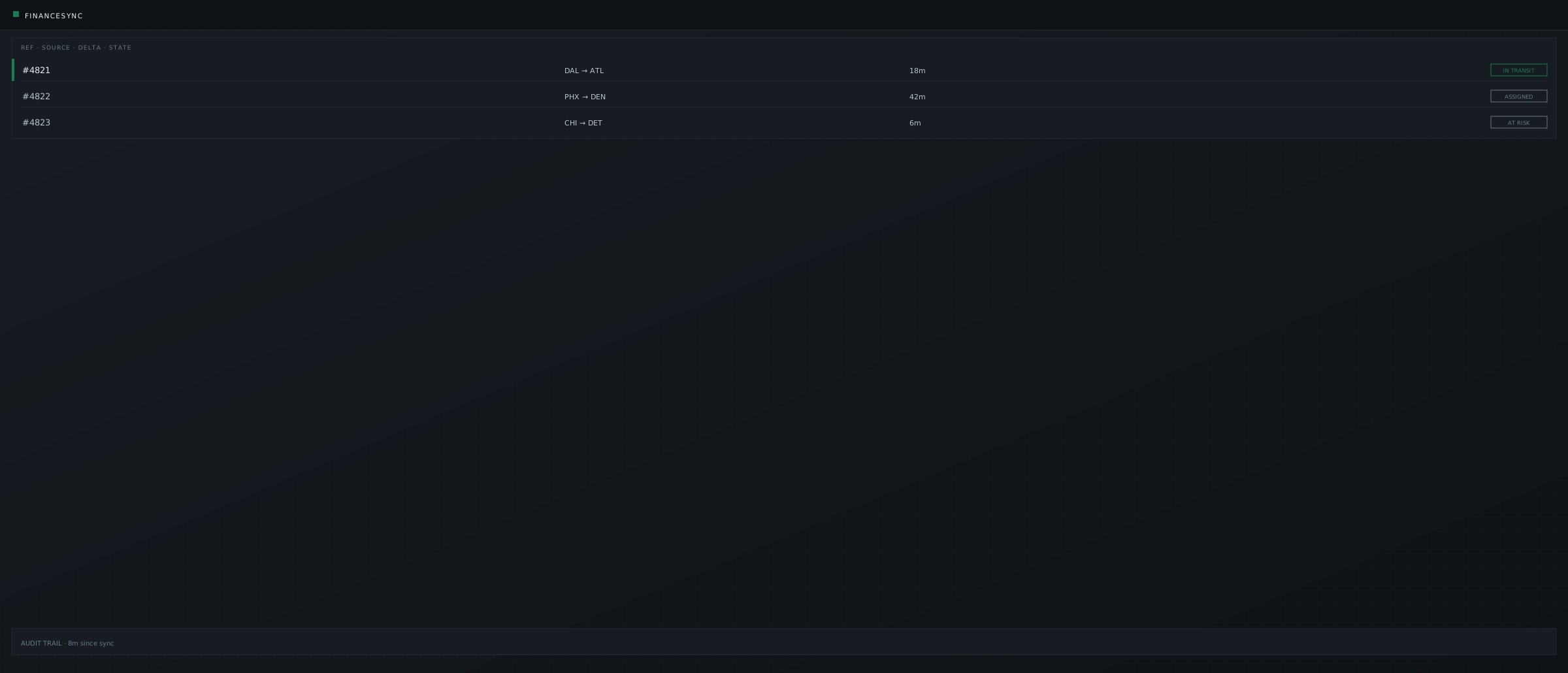
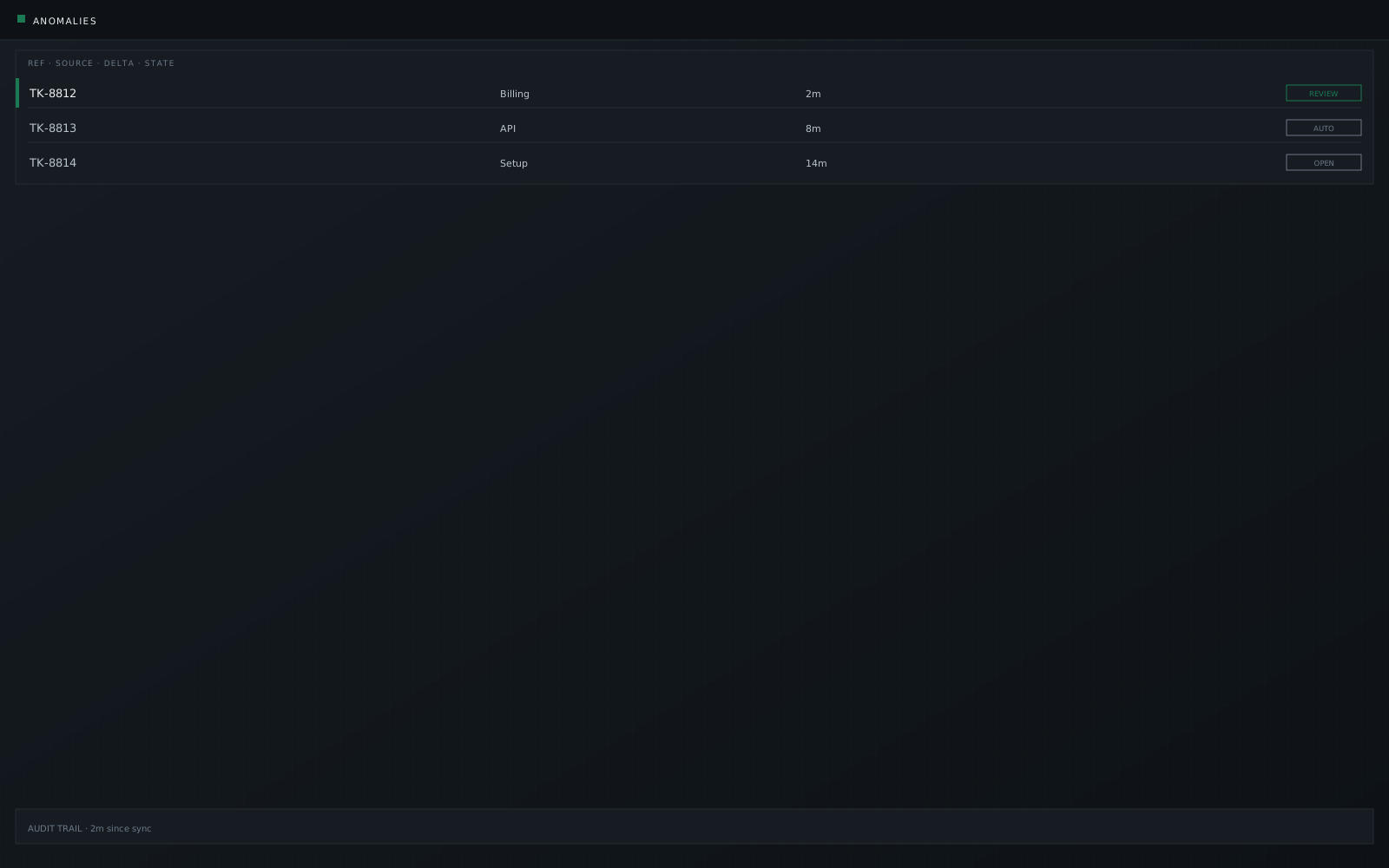
Suspected cause: digit transposition · Halden Co · Aug close
Demo Operator UI pattern · illustrative data
Architecture
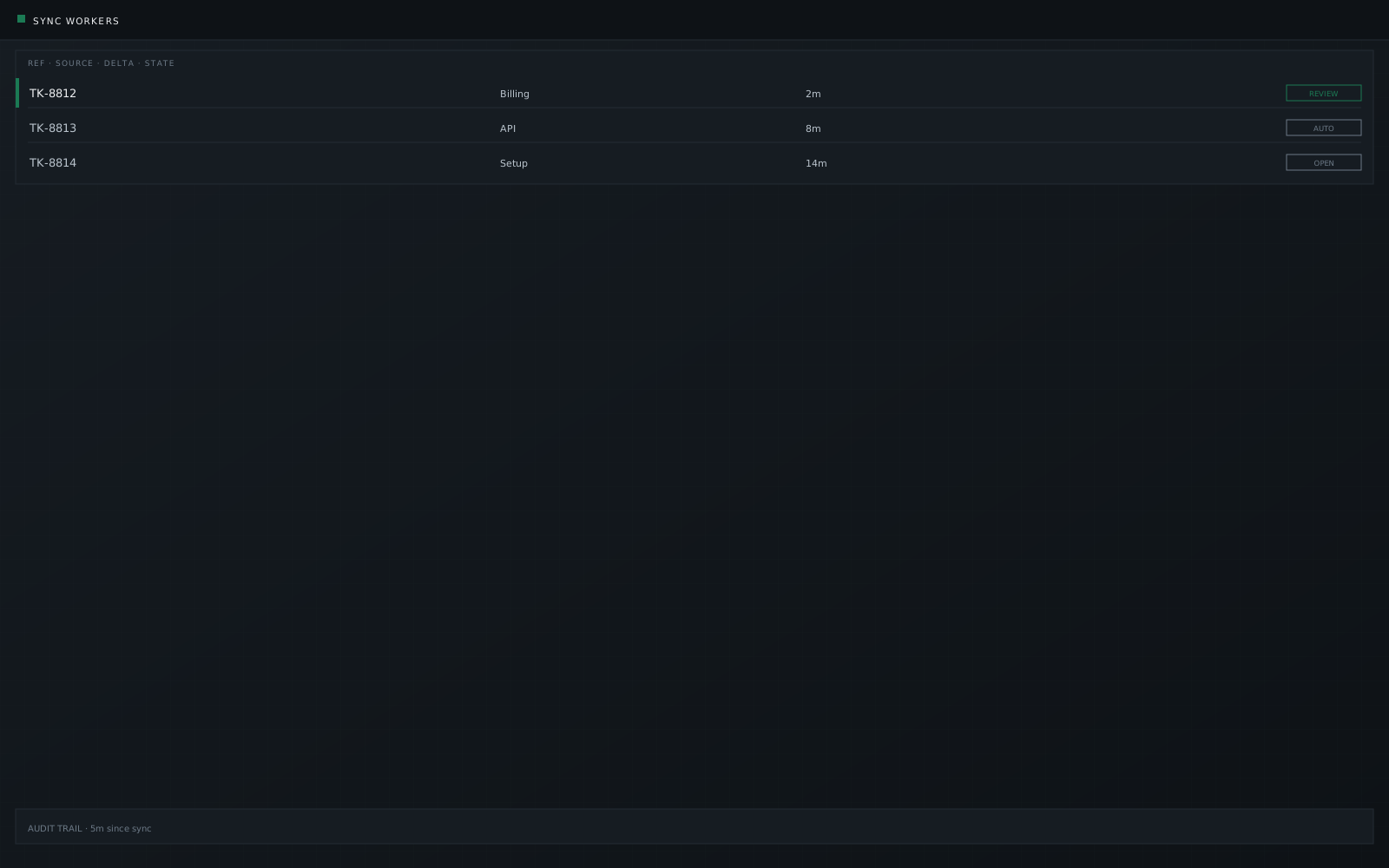
Six stages we design and build. Failures surface at the stage they belong, not as a generic 500 at month-end. Same path as the close cycle - shown here as architecture for engineering review.
Invoices, payments, payouts, and credit notes from your product or ops platform.
Idempotent jobs, backoff, and canaries. Retries that cannot duplicate a posting.
Official connectors, token refresh, and rate-limit handling per org.
Amount, tax, entity, and currency compared with a readable delta.
Operator triage with retry, confirm, or park - before close, not after.
Closed records and an attributable trail finance can keep.
Books that are not one company, one currency
A SaaS that bills in both regions usually runs QBO in the US and Xero in the UK. We keep connectors separate and triage unified.
We do not hide a conversion inside a "matched" tag. Operators see source currency, ledger currency, and the difference that needs a decision.
Tax codes are signed off in discovery. A missing or wrong code is an exception type, not a silent post to the default account.
Proof
Month-end close stalled on silent sync drift: finance found variances in spreadsheets, not in the product. Idempotent QBO/Xero workers, a match engine, and an exception queue with webhook + poll hybrid replaced the parallel spreadsheet.
Selected anonymized case in this space. Client names and identifying details may be changed for confidentiality. Metrics on case pages are measured delivery outcomes, not invented or third-party ratings.
Process
Four gated phases: Map → Build → Operator UX → Parallel run/go-live. Each gate is a finance-readable artefact.
Entities, tax codes, edge cases, and failure modes between your product and QBO or Xero. We do not start workers until mapping is signed.
Mapping signed offSync jobs, webhooks, and retries against a sandbox company. Staging must survive a forced timeout without duplicating a post.
Staging validatedDashboards and alerts so finance can clear exceptions without engineering tickets. If they still Slack us to close a line, the UX is not done.
Finance self-serveParallel run against live books, reconciliation checks, and a monitoring playbook. Cutover only after a clean close cycle.
Parallel run cleanFAQ
Asked most often by finance and engineering leads before a first call.
We primarily integrate QuickBooks Online via Intuit's API. Desktop is scoped case-by-case when the ledger cannot move to Online. Xero is always the cloud API.
Yes. Multi-region billing with separate connectors and a unified operator dashboard is a common SaaS pattern: QBO for US entities, Xero for UK, one exception queue.
Every job logs errors, retries with backoff and idempotency keys, and surfaces exceptions in an operator dashboard with a next step. Failures are visible before close, not after.
Integrations & APIs covers CRM, payments, ELD, and general connectors. This page is the finance-specific solution: QuickBooks, Xero, matching, close, and the operator UX around exceptions. Many products need both.
A focused QBO or Xero connector with operator UX is usually 8 to 12 weeks, including mapping sign-off and a parallel run. Dual-region or multi-entity setups run longer. We give a real range on the first call, not a padded one.
Payment events are source events in the same queue. Full payment connector scope lives under Integrations & APIs; close UX and matching stay here.
Start a conversation
Name the source system, QuickBooks Online or Xero, and where matching breaks. We reply with whether it needs a connector, operator UX, or both.
Reply within one business day NDA available No obligation
We will reply within one business day. If you still need a longer brief or a scheduled call, use the contact page.